
At a glance
Inboard stringer stairs suit projects that need a clean stair profile with strong detail options at the edge and balustrade.
They work well in many design-led homes and refurbishments.
The best choice depends on layout, look and site constraints, not trend images alone.
Check with Building Control if approval is needed on your project.
In this guide
This post explains where inboard stringer stairs work best, glass and handrail options, and the pros and cons against Centre Spine and floating stairs.
View related projects in the gallery or send us a plan or a few photos when you are ready for the next step.
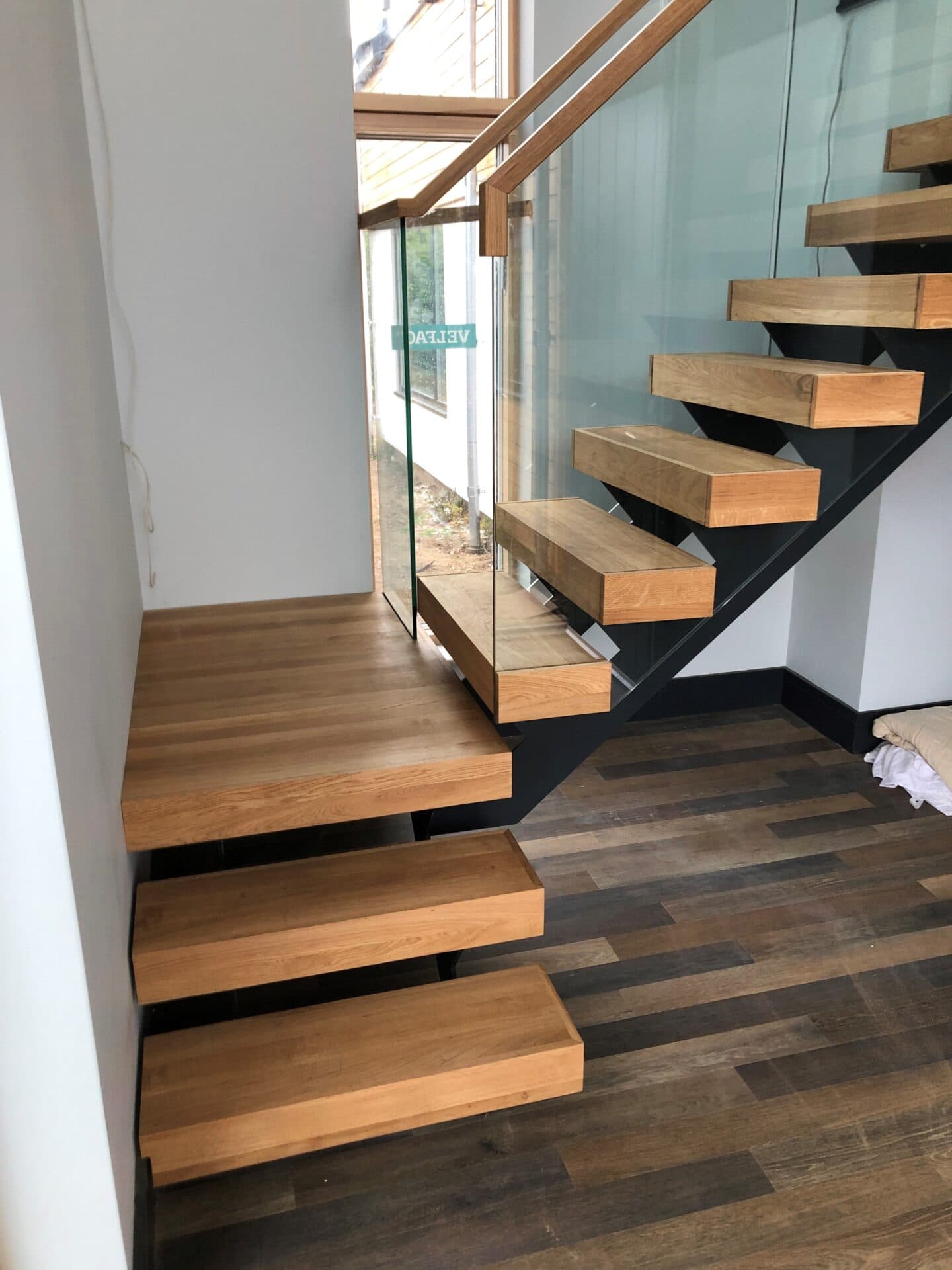
Inboard stringer stairs work well when you want a defined structural line without losing openness.
At a glance
A practical guide to inboard stringer stairs, with design options and a clear comparison with Centre Spine and floating stairs.
What to compare
Use the gallery and the related staircase pages to compare layout, structure, balustrades and finish details.
Before you enquire
A plan, sketch or a few site photos are enough to start a useful conversation.
What an inboard stringer stair is
An inboard stringer stair uses stringers set inboard of the outer edge of the stair line. This changes the profile and the way treads and balustrades sit together.
Checklist
- Save examples you like from the gallery
- Take photos of the stair opening and nearby walls
- Note if you want glass or posts
- Tell us if the job is a new build or refurbishment
Need help planning inboard stringer stairs?
Send your plans and a few photos. We can review the opening and compare inboard stringer, Centre Spine and floating stair routes.
Where it works best in real projects
This style works well where the staircase is a visible feature and the brief asks for a tailored finish. It can suit open-plan homes, extensions and stair replacements, depending on the opening and the design direction.
Refurbishment projects
In refurbishments, this style can be a good route when the stair opening is fixed and the client wants a fresh look with careful detailing.
New build projects
In new builds, early planning gives more freedom on balustrade details, tread finishes and the way the stair meets floors and glazing.
Need help planning inboard stringer stairs?
Send your plans and a few photos. We can review the opening and compare inboard stringer, Centre Spine and floating stair routes.
Ask about inboard stringer stairs
Glass and handrail options
Glass balustrades keep the line light. Posts can add more definition.
Pros and cons vs Centre Spine and floating
Inboard stringer stairs often sit between Centre Spine and floating stairs in visual feel and structural route. They can give a clear bespoke profile without the same wall demands as many floating stair designs.
| Stair type | Strong point | Main watch-out |n|---|---|---|n| Inboard stringer | Tailored edge profile and detail options | Balustrade detail should be set early |n| Centre Spine | Open-sided look with central support line | Layout and support points still need early review |n| Floating | Strong wall-led floating look | Wall build-up and fixing zones are key |
What to prepare before you enquire
Photos, rough sizes, plans if you have them, and a few example images are enough for a useful first review. Tell us if it is a new build or a stair replacement and who is on the project team.
For homeowners
Think about the look of the room and how the stair should feel in daily use. Tell us if you want the stair to stand out or sit back a little in the space.
For builders and architects
Share opening sizes, floor levels, structure notes and the build programme. This helps set the stair route and detail choices before the drawing stage moves on.
Common mistakes
- Choosing from photos without checking the opening
- Leaving balustrade details until late
- Not sharing access limits or programme dates
- Assuming one style fits every room
FAQ
What is an inboard stringer staircase?
It is a stair where the stringers sit inboard of the outer edge of the stair.
Where do inboard stringer stairs work best?
They suit design-led homes, extensions and refurbishments where a tailored stair profile is needed.
Can I use glass balustrades?
Yes.
How do they compare with Centre Spine stairs?
Centre Spine stairs give a central support line and open sides.
How do they compare with floating stairs?
Floating stairs often depend more on wall support.
Do they need Building Control checks?
Many projects do.
Next steps
Decide which stair styles you want to compare, then send photos and plans. We can guide you on the best route for the space and the brief.
Ready for the next step?
Share your project details and finish ideas. We will reply with clear next steps for design and drawing review.
Get a quote
Common questions
Quick answers to the points people most often raise before they enquire.
What is an inboard stringer staircase?
It is a stair where the stringers sit inboard of the outer edge of the stair.
Where do inboard stringer stairs work best?
They suit design-led homes, extensions and refurbishments where a tailored stair profile is needed.
Can I use glass balustrades?
Yes.
How do they compare with Centre Spine stairs?
Centre Spine stairs give a central support line and open sides.
How do they compare with floating stairs?
Floating stairs often depend more on wall support.
Do they need Building Control checks?
Many projects do.
Explore next
Use these links to move from ideas into real project planning.
Related guides: centre spine staircases · floating stairs · centre spine vs floating